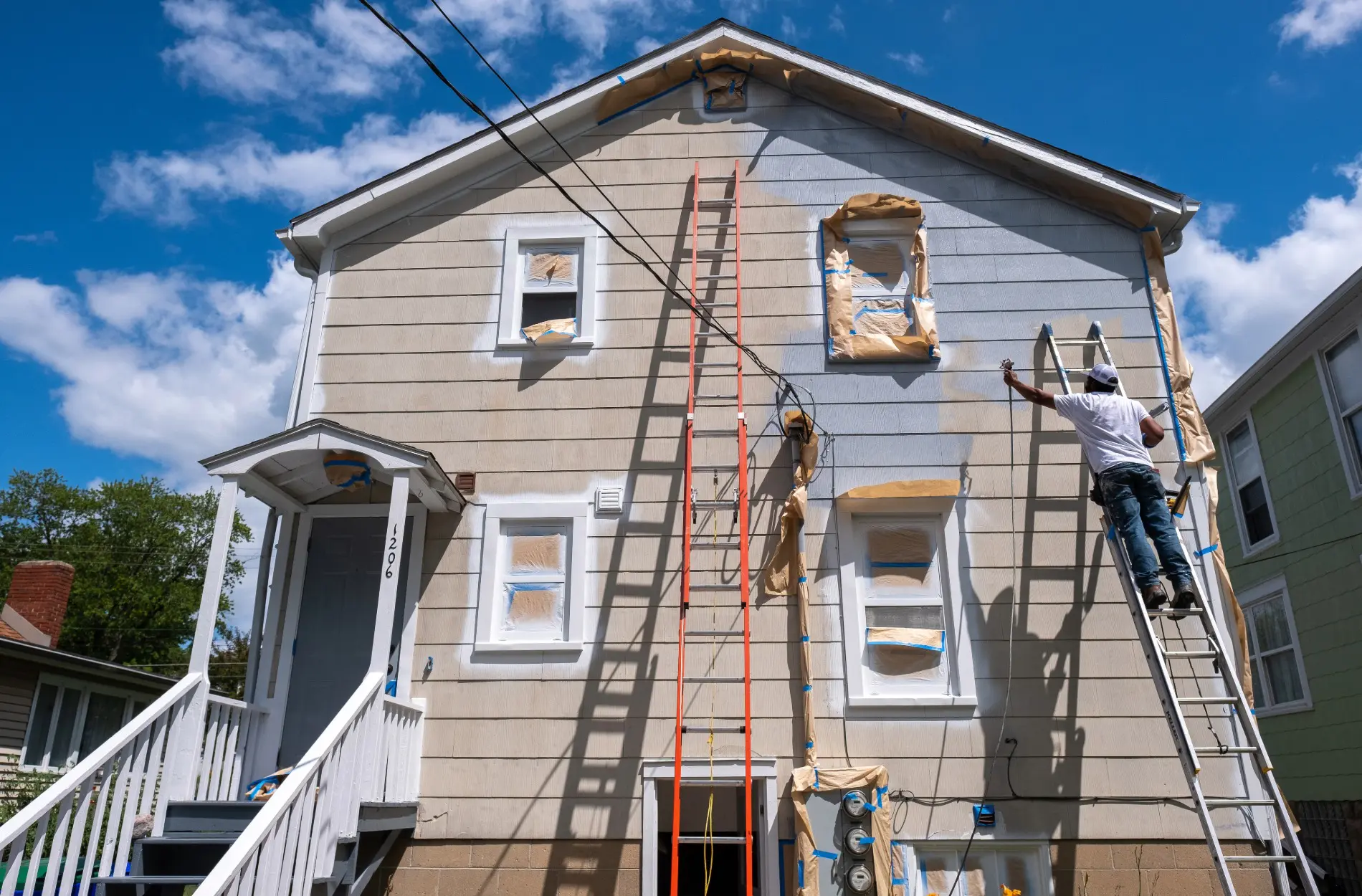
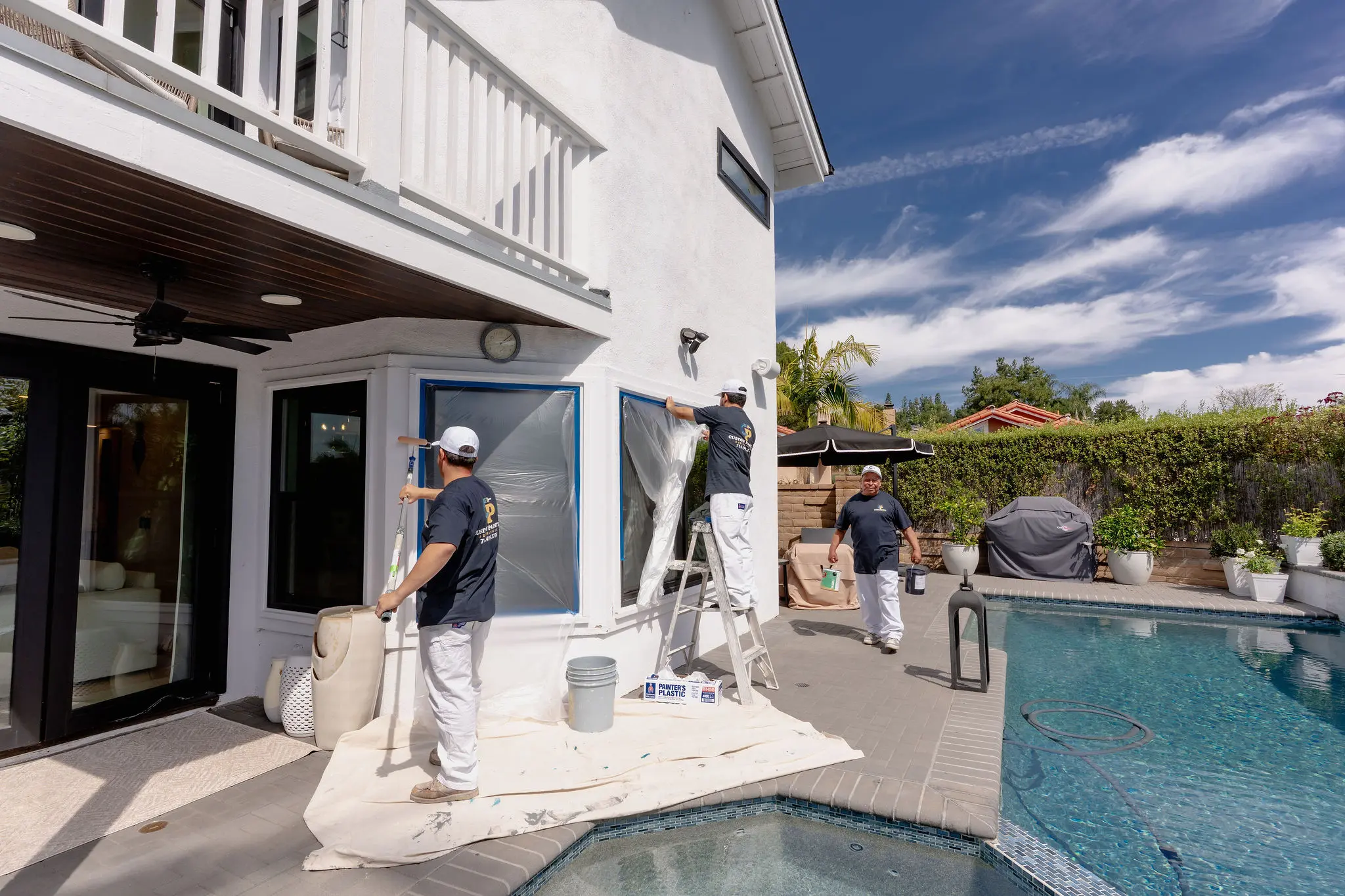
The best time to paint a house exterior in Southern California is usually late spring (March–May) and early fall (September–November). These windows give you moderate temperatures, dry weather, and steadier humidity levels, which helps paint cure properly and keeps your paint adhesion strong.
Southern California has a friendly climate, but your local climate still matters. Coastal areas deal with coastal humidity and morning fog, while inland areas fight extreme heat in summer. The goal is to pick the right season with the most ideal conditions for exterior painting—not just the warmest day on the calendar.
Why late spring is often the best season
In most regions of Southern California, spring is the best season for an exterior painting project because the weather stays mild and predictable. You avoid winter rain, and you’re not yet dealing with peak summer heat that can push wall temps too high.
Late spring is also a smart time to paint because wet surfaces are less common, and your paint surface is more likely to be clean and dry. That reduces the risk of poor adhesion, uneven finishes, and other issues that can shorten the life of a paint job.
Why early fall offers stable conditions
Early fall is the other ideal time—and many professional painters will tell you it’s the best time of year if you want consistent days with fewer surprises. In many neighborhoods, early fall offers warm days, cooler nights, and less chance of sudden storms than winter.
Fall also tends to bring fewer temperature spikes than summer. That helps paint level out instead of flashing dry. If you’re planning your year to paint, early fall is one of the safest bets for exterior work.
Fewer temperature spikes matters more than the average temperature—it’s the swing between hot and cool that causes paint to flash dry, not just how warm the day gets overall.
Ideal temperature and humidity levels for exterior painting
If you want the best time to paint, focus on the numbers—not just the season. A common ideal temperature range is 50°F to 85°F for many exterior coatings. (Some products do better in a narrower band, so always check the label.)
For humidity levels, keep them below 70% for good paint adhesion, and below 50% is even better for drying. Also watch the dew point: temperatures should remain at least 5°F above the dew point to avoid moisture forming on the wall. That matters a lot on a house exterior, especially near the coast.
The “5 degrees above dew point” rule isn’t a rough guess—it’s a documented engineering standard. Industry guidance built on ASTM testing methods holds that surface temperature should be at least 5°F above the dew point before coating work begins and should stay that way through application and drying, since invisible moisture can otherwise condense right under a fresh paint film.
— Source: KTA-Tator, “Determining Relative Humidity and Dew Point Temperature” (ASTM E337 guidance)
Morning vs afternoon: timing matters
Even on a perfect day, the time to paint matters. Painting in the early morning can be great—unless there’s dew or fog. Aim for ideal paint application when surfaces are fully dry. If one side gets blasted with sun, work the shady side first and follow the shade around the house.
Morning is often ideal, but only after the dew or fog has actually cleared—starting early just to beat the heat can mean painting over a surface that only looks dry.
What to avoid: direct sun, summer heat, and winter painting
The biggest risk in summer is not just hot air—it’s direct sun exposure heating the wall. Direct sunlight (or direct sun) can cause paint to dry too fast, leading to lap marks, poor leveling, and weak bonding. When temps climb past 90°F, paint applied on sun-baked siding can flash dry and create long-term problems.
Mid-summer is still possible, but it’s tricky. Plan around peak summer heat, paint in shorter sections, and avoid the hottest hours.
Winter painting has different problems. Even though SoCal winters are mild, seasonal rain, cold, and higher moisture can slow dry time and affect curing. In the cooler months, paint can stay soft longer, and water can get in before the coating has a chance to lock down. And while freezing temperatures are rare in many areas, they’re a hard “no” for most exterior products.
Coastal vs. Inland: two different challenges
Coastal cities like Huntington Beach, Newport Beach, and Laguna Beach deal with morning marine fog and higher year-round humidity, while inland communities like Anaheim trade that moisture for stronger, more sustained summer heat.
“Morning fog” along the SoCal coast is a well-documented, genuine climate phenomenon, not just an inconvenience. The U.S. Geological Survey’s Pacific Coastal Fog Project describes how coastal marine fog forms from “complex interactions between ocean evaporation, aerosols, atmospheric pressure, vertical air layering” and coastal topography—the same moisture-laden air that can leave a wall damp well past sunrise in beach-adjacent Orange County neighborhoods.
— Source: U.S. Geological Survey, “The Pacific Coastal Fog Project”
Prep and scheduling: set the paint up to win
Great weather won’t save a job if prep is skipped. Before you paint any surface, wash it. Power washing (done correctly) removes grime, salt, and loose paint so your new coating bonds well. Let everything dry fully—painting over damp siding is how you end up with blistering wet paint issues later.
A few practical planning rules that work in almost any season:
- Choose a stretch of weather conditions with no rain expected for 24–48 hours after painting.
- Avoid painting when the surface is hot from sun; move with the shade.
- If you’re doing a full home’s exterior, plan ahead and book early for spring or fall.
- Consider paint lines made for your conditions (many homeowners like Benjamin Moore or Sherwin Williams, but product selection should match the substrate and climate).
If you’re not sure what your siding needs, get a free estimate. A good crew will also help you schedule around sun patterns, humidity, and access—especially for larger exterior projects.
“Whether we’re on a foggy morning job near the coast or working around afternoon heat inland in Anaheim, we plan the schedule around the actual conditions on-site, not just the season on the calendar. That’s the discipline that gets a paint job to its full lifespan instead of the shorter end of the range.”
— The team at Custom Painting & Decorating Inc.
FAQs: Best Time to Paint a House Exterior in Southern California
1
What is the best time to paint a house exterior in Southern California?
The best time is typically late spring and early fall. Those months usually bring mild days, lower humidity, and fewer rain events, which helps paint bond well and last longer.
2
What temperature is ideal for exterior painting?
An ideal temperature range for many products is 50°F to 85°F. The best results come when the air and the surface stay in range for several hours so the coating can set and begin to cure.
3
What humidity levels are best for paint adhesion?
For strong paint adhesion, try to keep humidity levels below 70%, and ideally below 50%. Lower humidity helps paint dry at a steady rate and reduces the chance of moisture-related failures.
4
Is early fall a good time for exterior painting in SoCal?
Yes—early fall is often an ideal time because the weather is stable and less extreme. Many homeowners find early fall scheduling easier too, since the hottest part of summer has passed.
5
Can I paint my home’s exterior in summer?
You can, but summer requires careful planning. Avoid direct sun exposure and peak summer heat, because overly hot surfaces can cause fast drying, lap marks, and reduced durability.
6
Why is winter painting not recommended?
Winter painting is risky due to seasonal rain, cooler nights, and slower curing. Moisture and cool temps can lead to slow drying, weaker bonding, and early peeling on a house exterior.
7
How long should I expect paint to dry and cure?
Paint may feel dry to the touch in hours, but full cure can take days or longer depending on temperature, humidity, and airflow. Better conditions in spring or fall usually improve both dry time and long-term hardness.
8
Should I paint in the early morning?
Sometimes. Early morning can work if surfaces are dry and there’s no dew or fog. If the wall is damp, wait—painting over moisture increases the chance of adhesion problems later.
9
How long should it stay dry after exterior painting?
It’s best if rain is not expected for at least 24–48 hours after painting. That window helps the coating set up so water won’t wash into it or weaken the finish.
10
Do I need power washing before exterior painting?
In most cases, yes. Power washing removes dirt, chalking, and salt so the paint can bond to a clean paint surface, which supports better coverage, smoother results, and longer life.
Ready to lock in the right window for your home? Request your free estimate from Custom Painting & Decorating Inc. and we’ll build your schedule around your property’s actual conditions—coastal or inland—not just the season on the calendar.