

I am the owner of Custom Painting & Decorating Inc. in Orange County. I learned the trade as a kid, working alongside my father on painting jobs across Southern California, and started the company in 2018. With 20+ years of experience and 500+ projects completed, I write about what actually happens on a paint job so homeowners know what to expect before they hire.
Commercial painters work in occupied buildings by fitting the job around the people who use them: painting after hours, covering everything that stays in place, and phasing the work so the building never has to close. We used all three in August 2026 at the Richard Nixon Presidential Library and Museum in Yorba Linda, with only four days to finish.
That library painting project is the clearest example we have of how commercial painters work in occupied buildings. The library was open to visitors the whole time, and nothing we covered could come down off the walls.
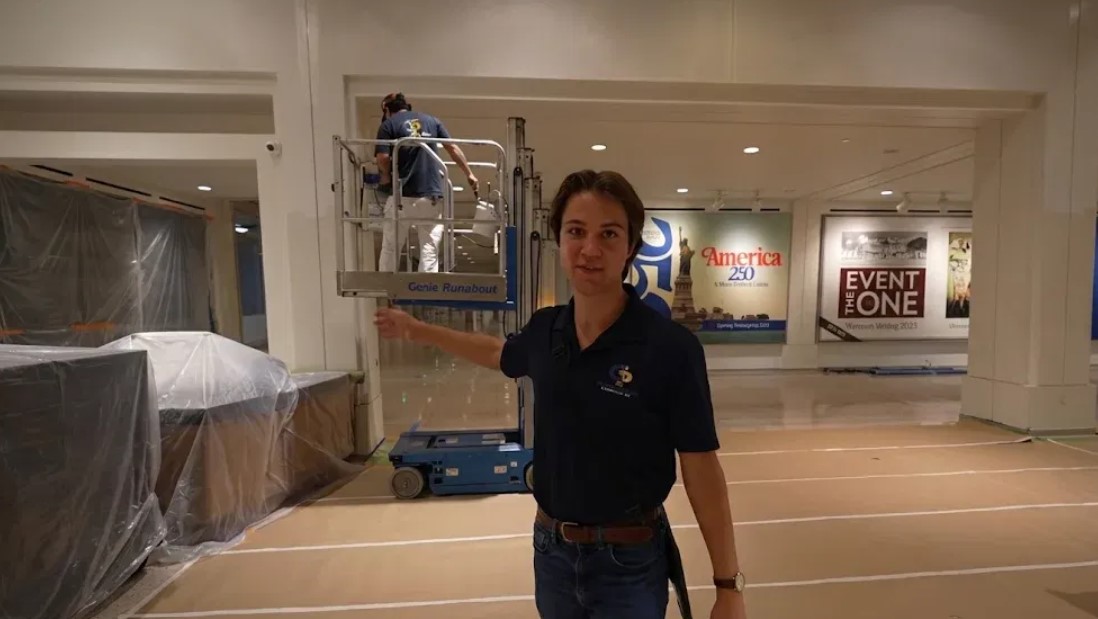
This short video from the job shows our crew rolling the ceilings, working from a lift, and the masking paper covering the floors.
View this post on Instagram
The Building Sets the Schedule
On a commercial job, the start date usually comes from the client, not the painter. The library had us come out in January to look at the space and told us the date we needed to start. When the work came around in August, we had four days to do it.
Any commercial painting timeline in a public building works this way. The calendar is built around events, visitors and staff, and the painting has to fit inside whatever window the building can give. That’s why the planning months ahead matters as much as the painting itself.
After-Hours Work Keeps the Doors Open
The library had one more condition: we couldn’t work during the day. After hours commercial painting lets a building keep its normal schedule while the crew works once the space is clear. For a museum, that meant visitors could walk through the galleries during the day without ladders, rollers or wet paint in their way.
Working after the public leaves changes how a crew plans each session. Every night, we knew exactly which areas we’d paint, how far we’d get, and what had to be ready before the doors opened again. Open buckets, wet edges and loose drop cloths all had to be sorted before visitors came back in.
Everything That Stays Gets Covered
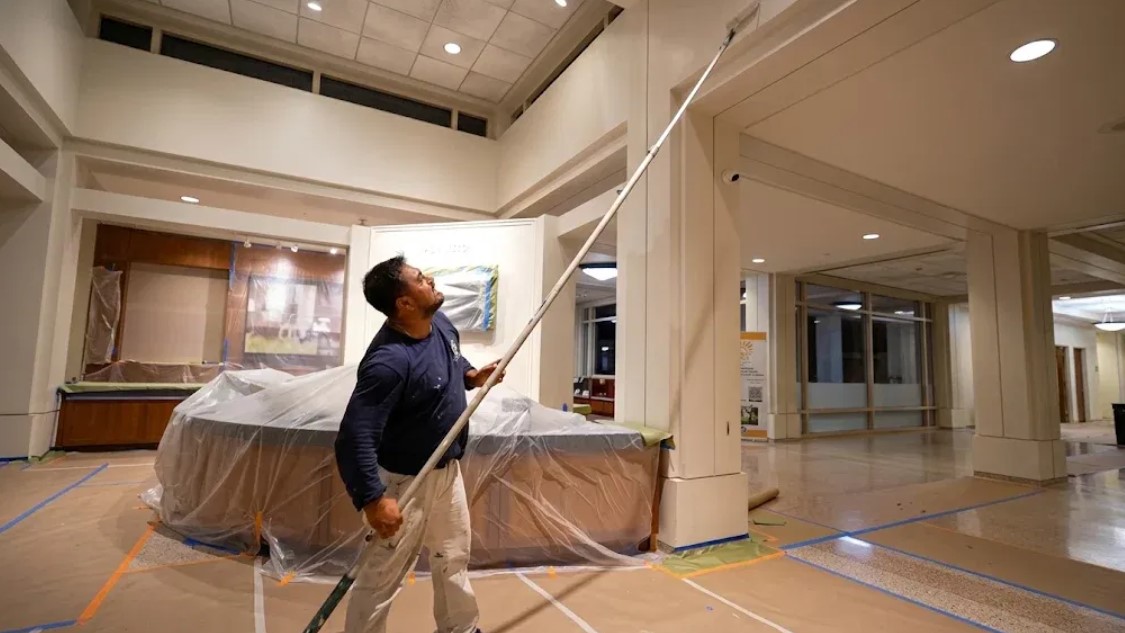
In a museum, very little can be moved out of the way. We covered and protected the floors, the counters, the TVs, and all of the individual letters mounted on the walls that don’t come off. Masking paper went down over the floors and was taped at the seams, and counters and displays went under plastic sheeting taped to the floor paper. The wall letters took the most care, since each one had to be masked in place rather than taken down.
Protection on a job like this is part of the schedule, not an extra. Every piece has to be covered before painting starts in an area and uncovered once it’s done, without a mark on it.

Phasing the Work Lets Visitors Keep Coming
The first question on a building this size is simple: where do we start? We phased the job around the people visiting the library, finishing one area each night before the doors reopened, so visitors walked through the next morning without running into wet paint or plastic.
Phased commercial painting is the answer to a building that can’t shut down. Painting a public building means guests, staff and events fill the day, so each night’s phase had its own protection, its own painting and its own cleanup before the library opened again.
Lifts and Long Poles Reach the High Spots
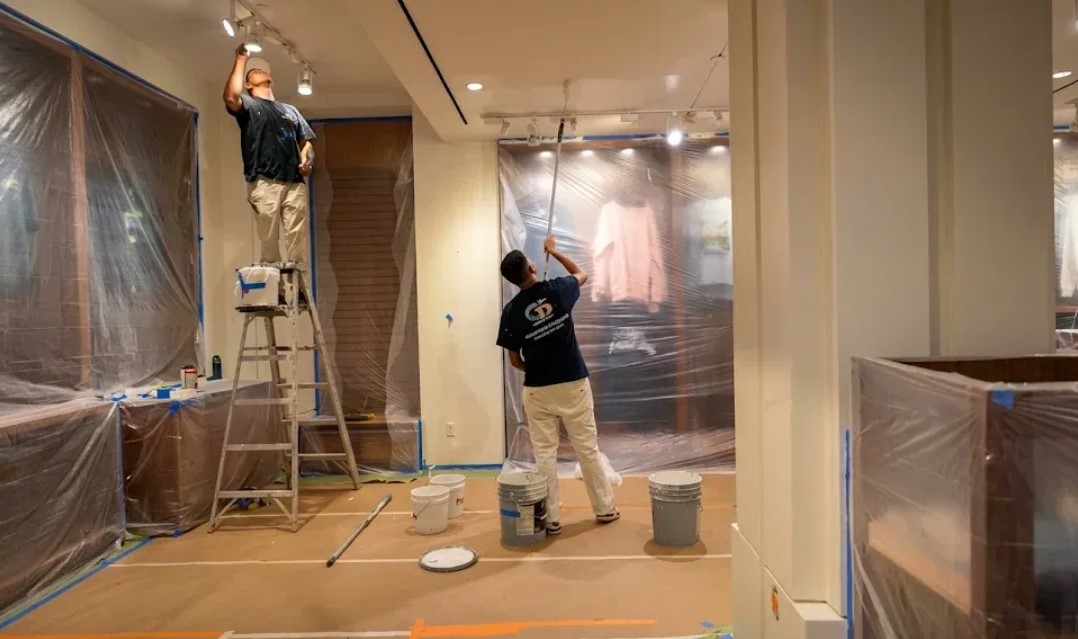
Big public spaces mean high ceilings and tall walls. Much of the work happened from a lift and with extension poles, which let the crew reach high surfaces without moving tall ladders around covered floors and wrapped displays.
For the paint, we used top-of-the-line Sherwin-Williams paint. A building that welcomes visitors every day needs a finish that looks good up close and holds up to a lot of traffic.
What to Ask Before You Book a Commercial Painter
If you manage a building that can’t close, ask any painter how they’d schedule around your hours, what they’ll protect and how, how they’d phase the work by area, and what equipment the high spaces need. Ask how many days they’ll need, too, and how they’ll plan each session so your space is ready when people come back. It’s also worth asking who your point of contact will be and how they’ll report progress. On a short deadline, knowing where the job stands each morning keeps everyone calm.
FAQ
Do we have to close while you paint?
Usually not. Most commercial jobs can be scheduled after hours or phased by area, so customers, staff or visitors keep using the building while the work moves from one section to the next.
How far ahead should a commercial job be booked?
As early as you can. Larger buildings often have fixed windows for work, and planning phases, protection and crew size takes time. The Nixon Library first had us walk the space months ahead.
What happens to things that can’t be moved?
They get covered in place. Counters, screens, display cases and lettering fixed to walls are wrapped in plastic or masked with tape and paper, then uncovered once each area is finished.
Is the paint smell a problem for people using the building?
Good airflow keeps it manageable, and working once the space has emptied gives each area time to air out before people come back the next morning. Lower-odor paints help as well.
Do you need lifts for tall spaces?
Often, yes. High ceilings and upper walls in lobbies and halls are reached with lifts or extension poles, which is safer and faster than moving tall ladders around covered floors and fixtures.
Your Building Doesn’t Have to Close
A four-day deadline, no daytime work and a building full of fixtures that can’t move is a lot to plan around, but it’s what commercial painting often looks like. If your building needs paint and can’t shut down for it, talk to us about a schedule that works around your hours.